
What Actually Happens to a Missed Call at a Plumbing Company (And How to Fix It)
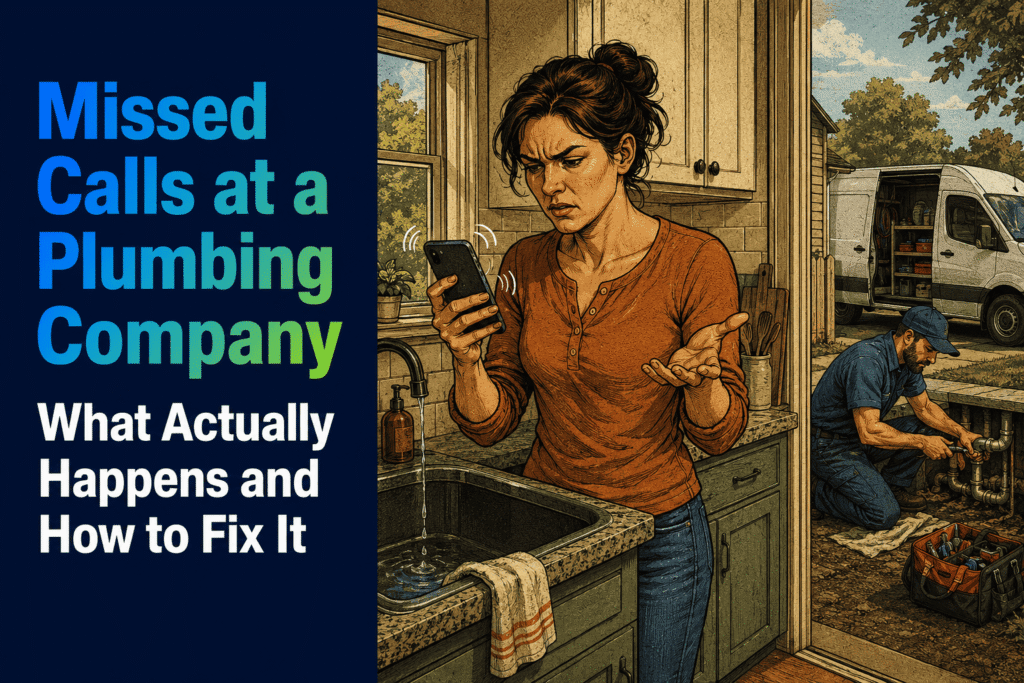
A pipe bursts at 9 PM. The phone rings twice, goes to voicemail, and the homeowner calls the next plumber on the list. Here’s what that costs, why a CRM alone doesn’t fix it, and what actually does.
Quick Answer
A missed call at a plumbing company isn’t a phone problem — it’s a system problem. A CRM helps you track jobs once they exist; it doesn’t catch the call that never became a job. RevUp Now AI builds the specific system your plumbing business needs — call handling, dispatch, invoicing, or collections — based on where you’re actually losing work, not a one-size-fits-all plumbing app.
Who This Is For
Plumbing companies running enough call volume that someone — the owner, a tech between jobs, whoever’s closest to a phone — is the informal answering service. If a job has ever gone to a competitor because nobody picked up, this is for you.
What Actually Happens to That Missed Call
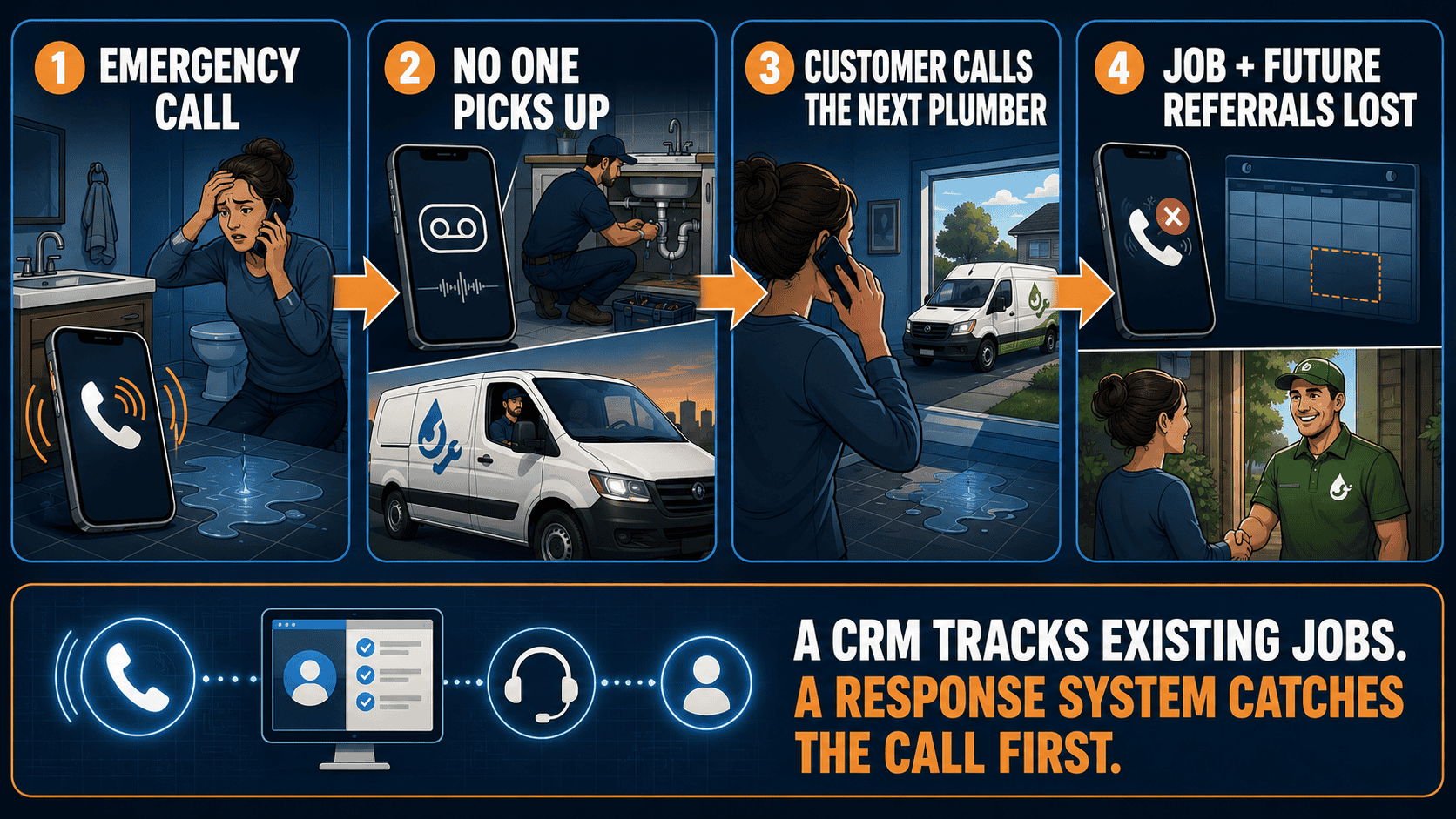
The tech is under a sink. The owner is driving to a job. Whoever’s closest to the office phone is already on another call. The burst-pipe call rings out, goes to a generic voicemail greeting, and the homeowner — who is standing in an inch of water — doesn’t wait around. They call the next plumber in the search results, or the one their neighbor used last year.
That’s not a story about a bad employee or a slow week. It’s the default outcome any time call volume and job volume compete for the same two hands, which is every day for most plumbing companies.
The Real Cost, Beyond the One Job
The obvious cost is the job itself — say, a $400 service call. But that number understates it. That customer doesn’t just skip you once; they don’t come back for the next issue, and they don’t refer you to a neighbor. The plumber who answered gets the job, the repeat business, and the referral.
Why a CRM Alone Doesn’t Fix This
Plumbing CRMs are good at what they’re built for: tracking a job once it exists — scheduling, dispatch notes, invoicing history. What they don’t do is catch the call before it becomes a missed opportunity. A CRM is a filing system. It doesn’t answer the phone, and it doesn’t know a burst pipe at 9 PM is worth interrupting dinner for, while a routine drain cleaning next Tuesday isn’t.
That’s the gap between buying software and having an actual system: software organizes what already happened. A system changes what happens next.
DIY CRM vs. Answering Service vs. Done-for-You
| DIY plumbing CRM | Generic answering service | RevUp Now AI | |
|---|---|---|---|
| Catches the missed call | No — tracks jobs after the fact | Yes, but with a generic script | Yes, built around how your business actually triages calls |
| Knows what’s urgent | No | Rarely — same script for every call | Yes — burst pipe vs. routine maintenance triaged differently |
| Who sets it up | You, in a dashboard | A vendor’s fixed script | We do, based on a real conversation about your business |
| Covers more than calls | No — that’s the whole product | No — that’s the whole product | Yes — whatever’s actually costing you: calls, dispatch, invoicing, collections |
| Pricing | Monthly subscription per seat | Per-call or tiered plans | Flat monthly retainer, month-to-month, no lock-in |
How Do We Figure Out What to Actually Build
We ask where calls, hours, and dollars actually leak out of your business. Sometimes it’s the phone. Sometimes it’s the collections process from our earlier work on plumbing invoicing.
We build the specific system around what we find — not a generic plumbing app, your actual workflow.
Supervised go-live. We watch real calls before anything runs unsupervised.
Every month after, we keep running it and keep looking for the next bottleneck.
Myths About AI in Plumbing Businesses
Myth: “This is just another AI answering app.”
Reality: An app gets configured by you and left alone. We build the system around your specific business and stay on to run it every month.
Myth: “My techs already handle calls fine between jobs.”
Reality: That works until call volume and job volume peak at the same time, which for most plumbing companies is constantly.
Myth: “A CRM will fix this.”
Reality: A CRM organizes existing jobs. It doesn’t catch the call before it becomes a missed one.
Myth: “This is expensive compared to just answering the phone myself.”
Reality: The real comparison isn’t retainer vs. free — it’s retainer vs. jobs, repeat business, and referrals that already went to a competitor.
Related reading
Not Sure If Calls Are Actually Your Biggest Bottleneck?
That’s exactly what the first conversation is for. We’ll look at how your plumbing business actually runs and tell you, honestly, where the real cost is — calls or something else.
Let’s talk →FAQs
What CRM do plumbers use?
Most plumbing companies use a dedicated field-service CRM for scheduling and invoicing. That’s a different tool from what catches a missed call in the first place — the two solve different problems.
How long can you leave an invoice unpaid before it matters?
Every week an invoice ages, the odds of collecting on it drop. It’s a separate problem from missed calls, but the same root cause: nobody built a system to catch it automatically.
Is there a free way to handle missed calls?
Basic call-forwarding and voicemail are free but don’t triage or respond — they just record that a call happened. The cost isn’t the tool, it’s what happens (or doesn’t) after the call.
How much does this cost?
A flat monthly retainer, month-to-month, no lock-in. What we build depends on what’s actually costing your business — sometimes that’s call handling, sometimes it’s something else entirely.