Plumbing emergencies happen at night and on holidays, and the customer calls until someone picks up. Our plumbing answering service answers every call, figures out what’s going on, and books it or escalates it. Then it takes care of the invoicing and follow-up that usually eats your evenings.
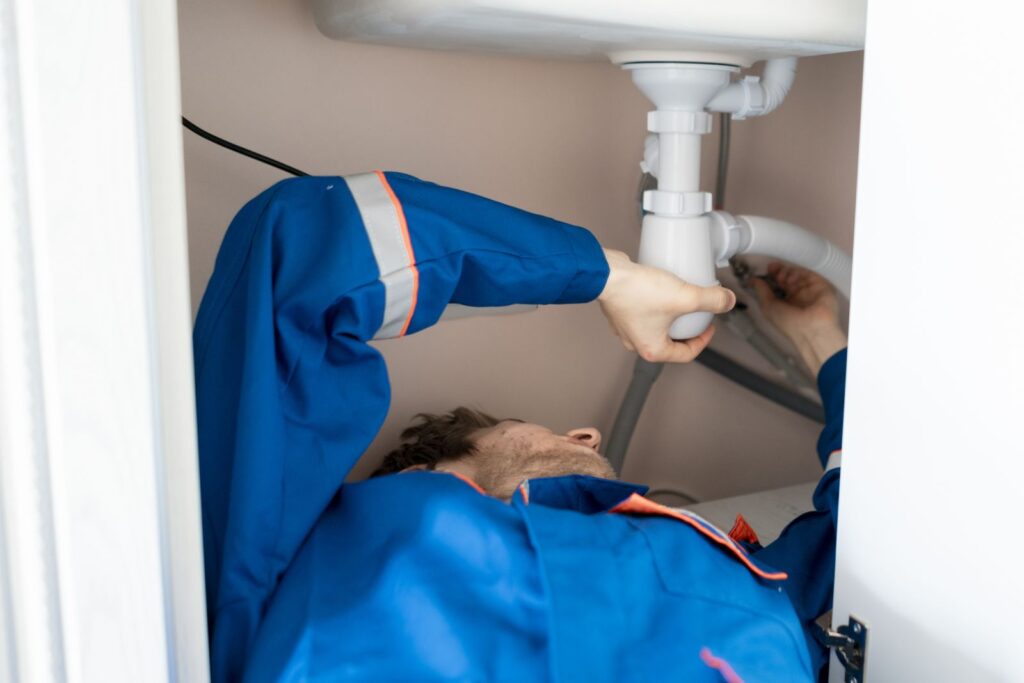
A plumbing answering service answers your business line when you can’t, most often after hours and during rush periods. The usual model takes a message. RevUp Now AI answers 24/7, asks plumbing-specific questions (water shut off, active leak, sewage, no hot water), books the job or escalates true emergencies to your on-call plumber, and logs everything in the tools you already use. You pay a flat monthly fee, not by the minute. It works as a 24/7 plumbing answering service, covering nights, weekends and cold-snap surges. For the full on-call picture, see our emergency answering service. Also see our plumbing CRM setup and automation.
Someone with water coming through the ceiling isn’t going to leave a voicemail and wait. They’ll call down the list until a real answer comes back. For a plumbing company, a missed call at 9pm is often a lost emergency job, and emergency jobs tend to be the best-paying ones of the week. We wrote up what actually happens to a missed plumbing call.
Hiring more people isn’t an easy fix either. The Bureau of Labor Statistics projects about 42,000 openings for plumbers, pipefitters and steamfitters every year through 2035, and every shop is competing for them.
Answering is the obvious gap. For most plumbing shops, the time sink is everything that happens after the job is done. Maybe you’ve run into some of this:
Invoices go out days after the job, and chasing unpaid ones becomes somebody’s whole Friday. More on that in why plumbing collections take so long.
The water heater replacement quote went out, the customer went quiet, and nobody followed up.
Tracking which jobs need a return visit usually lives on paper or in someone’s memory.
The customer was thrilled you came at midnight. Nobody asked them to say so on Google.
A dripping faucet and a pipe spraying water through a ceiling both start as a phone call. A plumbing answering service earns its keep by telling them apart, using rules you set.
True emergencies. A burst pipe, a sewage backup, a water heater leaking into the house, no water at all, a gas smell near an appliance. These are escalated right away to your on-call plumber, with the address, what the caller sees and whether they can reach the shutoff valve. For a suspected gas leak, the rule is usually to get everyone out and call the gas utility or 911 first, and that is written with you in advance.
Urgent, not flooding. A clogged main drain, a toilet that won’t stop running, a leak that is slow but active. These get the earliest slot on your real schedule.
Routine work. Fixture swaps, faucet repairs, a quote for a new disposal. Booked for the next open day without waking anyone up.
Replacement and larger jobs. Water heater replacement, repiping and remodel work are the tickets worth answering first for. The system asks the qualifying questions and books the estimate visit.
Existing customers and commercial callers. Reschedules, arrival windows, property managers and landlords calling about a tenant’s unit. Answered or routed instead of pulling your office off the job.
Plumbing doesn’t keep office hours. Pipes freeze overnight, water heaters fail on weekends, and the call comes in while your on-call plumber is already under a sink somewhere else.
Two things matter most here. First, who gets told. A good setup follows your on-call rotation, so the right person gets the text and a backup is notified if nobody responds. Second, what a surge costs. A cold snap can multiply your call volume in a day, and per-minute billing makes that your most expensive week. A flat monthly fee doesn’t change.
You can also start small. Many shops begin with after-hours and overflow, keep answering during the day, and widen coverage later. For the wider picture, see our guide to the AI answering service.
Here is an example of how one call can run, using rules like the ones we would build with you.
A homeowner calls at 2:05am. Water is running down the kitchen wall. The system answers on the first ring, takes the name, address and callback number, and asks what you have defined: where is the water coming from, is it still running, can you reach the main shutoff, is it near anything electrical. Because your rules treat an active leak as an emergency, it texts your on-call plumber right away with the address and details, and tells the caller to shut off the main valve if they can reach it.
A job ticket is created with all of it. The caller knows help has been notified instead of listening to a voicemail beep.
The after-call work matters too. We cover what happens next in what happens to a missed call at a plumbing company and plumbing collections automation, and there is more on the plumbing AI agents page.
| Voicemail | Traditional answering service | RevUp Now AI | |
|---|---|---|---|
| Picks up at 2am | No | Yes | Yes |
| Sorts real emergencies | No | Sometimes, from a script | Yes, using your triage rules |
| What the caller gets | A beep | A message and a callback | A booked job or your on-call plumber |
| How it’s billed | Free | Usually per minute or per call | Flat monthly fee |
| Invoicing and follow-up | No | No | Yes |
Traditional answering services vary. This compares the typical message-taking model.
Ask every provider the same six questions:
A flat build fee to set it up and a flat monthly fee to run and maintain it. No per-minute billing, so a freeze week doesn’t come with a surprise bill. Month to month, no lock-in, and usually live in about 30 days. Here’s how the setup works.
We usually start with the phones, then take on the next bottleneck, because the same system that booked the job can send the invoice and chase the payment. See how it works for plumbing companies.
No pitch deck. We’ll look at how calls, jobs and invoices move through your shop and tell you straight whether this is worth doing.